From Chores to Commissions: One Engine, Two Markets
Share
The engine that pays a child for sweeping the kitchen floor now pays a woodworker for a walnut table. This is the story of how one Tollbooth DPYC operator came to carry two markets.
A chore is a small contract
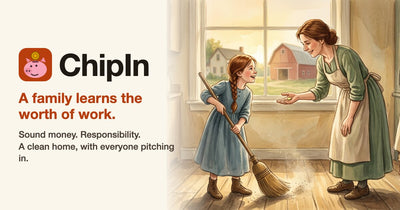
When we built ChipIn, we thought we were building a better allowance. A parent posts a chore and says what each grade earns, a child claims it and does it, the parent grades the work, and the sats travel from the parent's Lightning wallet straight to the child's. It is a gentle first lesson in work, in saving, and in money that nobody can quietly print more of.
Underneath ChipIn, however, sits something more general. TaskBooth, the operator that ChipIn talks to, does not know anything about kitchens or trash cans. It knows about a task that someone posts, a person who claims it, work that is delivered and graded, and a payment that the grade determines. Strip away the crayon colours and that is a contract: an offer, an acceptance, a performance, and a consideration.
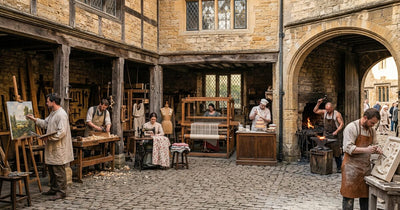
Once we saw it that way, the next question asked itself. If a child can be paid fairly for a chore under terms agreed before the work begins, why can a portrait painter, a seamstress or a cabinetmaker not be paid the same way for a commission?
What a commission needs that a chore does not
A chore is small, short and trusting. A commission is none of those things. It runs for weeks or months, the sums are large enough to matter to both parties, and the client and the artisan may never have met. Three things therefore had to be added to TaskBooth before it could carry serious work.
The first was terms that both parties sign. On CommissionMarket, every commission carries a cover page under one set of plain Standard Terms. The cover page states the deliverables, the specification, how long the client has to review the delivery, and who owns the intellectual property. Both parties then sign the very same offer, and they sign it before the work starts: the client signs before anyone may claim the commission, and the professional signs before the work can be marked done. A person signs by replying to a Nostr message from their own app, using the same Secure Courier that proves identity everywhere else on Tollbooth DPYC, while an agent signs with its own key.
The second was money that moves with the work. A painter should not have to finance a client's portrait out of her own pocket for three months. A CommissionMarket client therefore pays a deposit when the commission is claimed, pays each milestone as its date arrives, and pays the remainder of the award once the work is graded, with anything already paid deducted so that nobody is paid twice. In the worked example on the site, a portrait with a top grade of 100,000 sats takes a 10% deposit on claim and milestones of 20% and 30% on their dates, so an Accepted grade leaves 40,000 sats to complete the award.
The third was protection against silence. Every artisan knows the client who takes delivery and then simply stops answering. Each cover page therefore names a deemed grade and a review period, and if the client never grades the work, it is graded at the deemed grade once that period passes. The professional is never left holding finished work and an empty wallet.
Paid directly, never held
The large freelance marketplaces solve the problem of trust between strangers by holding the client's money themselves, in escrow, and releasing it when they see fit. That works, after a fashion, but it makes the platform a bank, it obliges the platform to know everyone's identity, and it gives the platform a reason to take a sizeable share of every job.
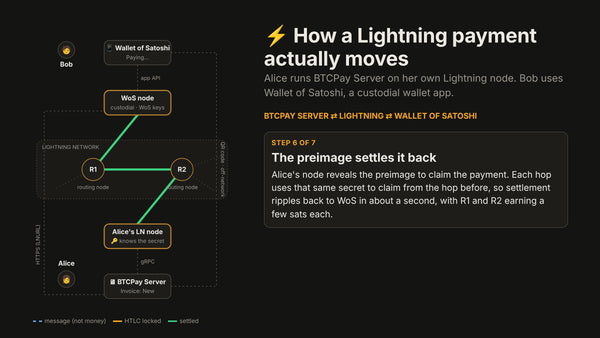
CommissionMarket takes the opposite approach. TaskBooth keeps the record of the commission, including the signed offer, the dates, the grades and the confirmations, but it never holds a single sat. Each payment is a Lightning invoice that travels from the client's own wallet to the professional's in a second or two, as we described in How a Lightning Payment Actually Moves. Because the commission never passes through the service, the service takes no share of it. What the service does charge is a small toll per call, paid from a prepaid balance of API sats, exactly as every other Tollbooth DPYC operator charges.
Unlike those marketplaces, CommissionMarket also asks for no account, no email address and no identity documents. Each party is a Nostr public key of their own choosing, and the trust that escrow would otherwise supply comes instead from the terms both parties signed, the circle of professionals the client chose, and payments small enough at each stage that neither side carries much risk at once.
A circle, not a crowd
Open marketplaces invite the whole world to bid on every job, which is how they become races to the bottom. A CommissionMarket client instead names the circle of npubs who may claim a commission: the joiners whose work they already admire, the seamstresses a friend recommended, or the engineers on their own team.
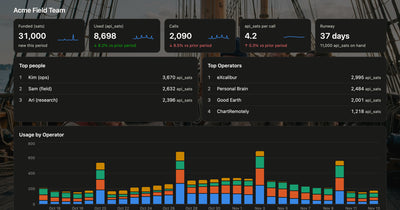
That same idea scales up to a studio or a practice. An owner can create an Organization, add its members by npub, and file commissions into Projects. Each Project carries its own circle and its own default cover terms, which new commissions inherit, and it reports what has been committed and what has been paid. Combined with Purser, a small firm can see both what its commissions cost and what its people spend on the tools they use to do them.
The artisan economy we keep writing about
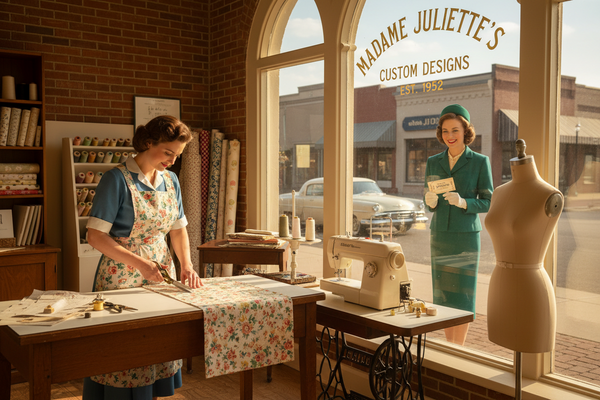
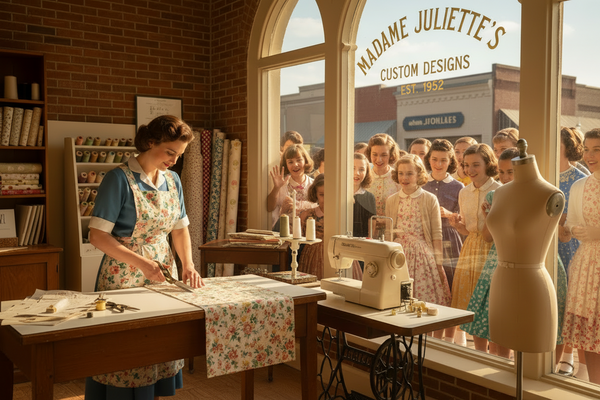
Long before CommissionMarket existed, we wrote about the artisan entrepreneur and about Madame Juliette's prom season, imagining how a skilled maker might meet demand on her own terms with Tollbooth DPYC. CommissionMarket is that idea with a front door. A dressmaker can now accept a commission from a client she has never met, agree the terms in writing before cutting the first pattern, collect a deposit on the spot, and be paid the balance the moment the dress is accepted, all without a merchant account, a processor's review or a platform standing between her and her customer.
One engine, two markets
We did not build a second engine for CommissionMarket. It is a second web front end on the same TaskBooth operator that ChipIn uses, in the same way that Good Earth and FieldData share one front end across two operators. The tollbooth-dpyc wheel already gave TaskBooth its metering, its Lightning credits and its patron identity, and the @tollbooth-dpyc/web module already gave its front ends their sign-in and top-up. What we wrote for CommissionMarket was the part that makes a commission a commission: the signed offer, the cover page, the deposit and milestones, and deemed acceptance.
That is the pattern we keep returning to. Each new market costs about as much as its own useful part, and everything it builds becomes available to the markets beside it. A household that pays chores through ChipIn is already a step away from commissioning a quilt through CommissionMarket, with the same key, the same wallet, and the same habit of agreeing terms before the work begins.
Agree the terms first, pay as the work arrives, and let the money go straight to the hands that made it.
Commission something
Visit commissionmarket.tollbooth-dpyc.com and sign in with your own npub, or add TaskBooth to Claude as a custom connector and ask it to post a commission for you. If you are an artisan, send the link to the clients who already admire your work, and invite them to name you in their circle.
Further reading
- Owning your work. Third Way: Foundations of Distributism and The Servile State argue for a society of small proprietors and independent craftsmen rather than one of wage dependency, and Small Is Beautiful makes the case for work at a human scale.
- Exchange and contract. Human Action and Choice explain voluntary exchange from first principles, Economics in One Lesson is the short version, and Pillars of Prosperity ties free markets to honest money and private property.
- The money that moves. Mastering the Lightning Network explains the payment rails beneath every deposit, milestone and award.
- The services. CommissionMarket and ChipIn both run on TaskBooth MCP, and Purser MCP keeps a studio's books. The MCPs collection lists the rest of the network.
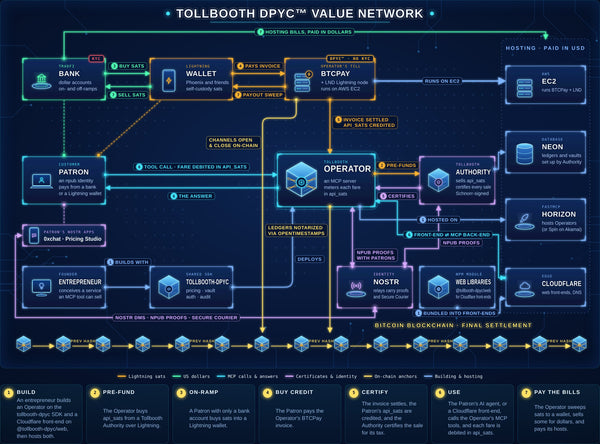
- Our earlier stories. From Entrepreneurial Idea to Compensated Service maps how value moves through the network, and No Passwords, No Browser OAuth, No Problem covers the Nostr keys that sign every offer.
CommissionMarket and ChipIn are front ends on TaskBooth, a Tollbooth DPYC operator. Tollbooth DPYC is open source under Apache 2.0: CommissionMarket, taskbooth-mcp and tollbooth-dpyc.