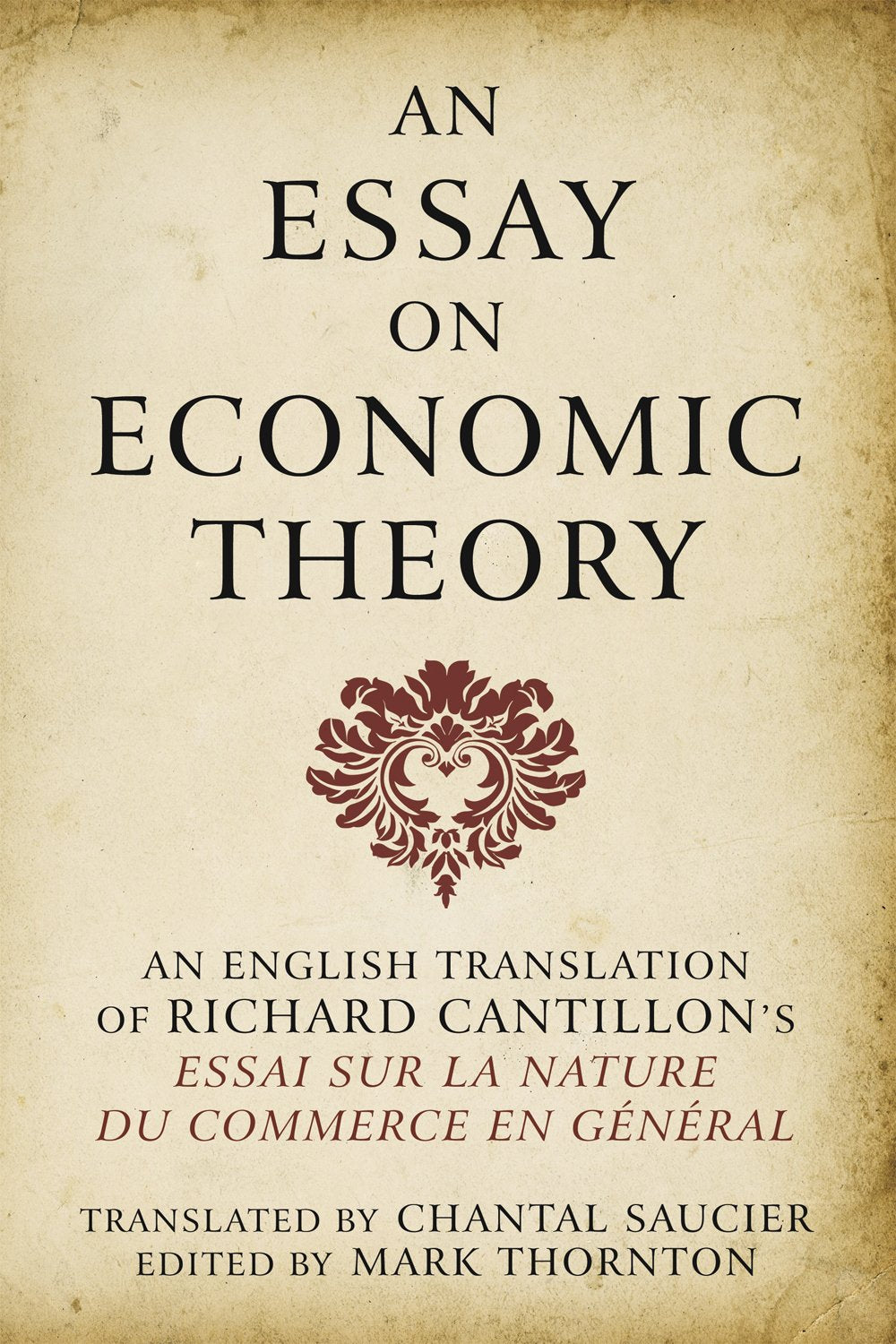
Written around 1730, circulated in manuscript for twenty years, published anonymously in 1755, and then largely forgotten. Jevons called it the cradle of political economy. Rothbard called Cantillon the founding father of modern economics. It precedes The Wealth of Nations by a generation and gets right a good deal that Smith got wrong.
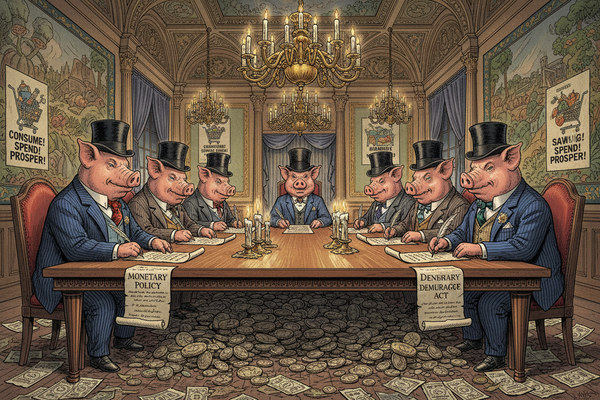
The insight the rest of the world took two centuries to absorb. Everyone before Cantillon who noticed that more money means higher prices treated the effect as uniform, as though a doubling of the money supply doubled every price at once. Cantillon saw that it does not. New money enters the economy at a point — a mine, a mint, a bank, a treasury — and spreads outward from there. Whoever receives it first spends it at yesterday's prices. Whoever receives it last finds the prices already risen and their wages not yet. The quantity of money changes, and so does its distribution, and the second effect is the one people feel.
That is the Cantillon Effect, and it explains why an inflation can enrich a capital while emptying a countryside.
Where the idea came from. Cantillon was working a vein the Spanish scholastics had opened. The School of Salamanca — Azpilcueta, Covarrubias, Molina, Mariana — had watched American silver arrive at Seville through the sixteenth century and worked out the quantity theory of money from direct observation. Azpilcueta wrote in 1556 that money is worth more where and when it is scarce than where and when it is abundant. They arrived at subjective value in the same period: a thing is worth what men will give for it, not what it cost to make. Cantillon added the part they had missed, which is that the new money does not arrive everywhere at once.
Rothbard traced the Austrian line back through Cantillon to those Salamancan friars rather than to Smith, and this book is the hinge of that argument.
Mark Thornton and Chantal Saucier's translation, published by the Mises Institute in 2010, replaces the 1931 Higgs edition that had rendered entrepreneur as undertaker throughout. Thornton's footnotes supply the historical context. Robert Hébert writes the foreword.