How a round goes
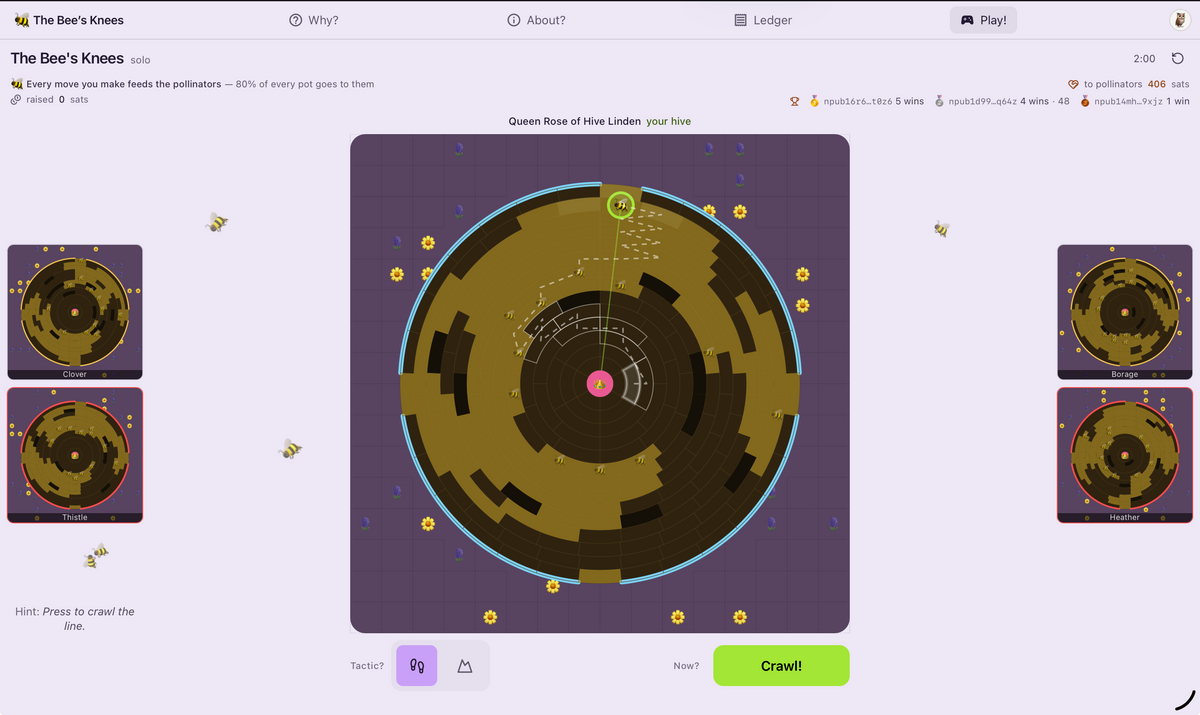
Take charge of one drone. Find a flower, carry the pollen home through the hive wall, then tunnel inward to the queen before anybody else’s does. Five hives run at once with twelve seats each, and seats fill the fullest hive with room, so a match reaches quorum instead of leaving everyone waiting in five thin ones. Every motion costs a few satoshis.
Of each pot, eighty percent goes to a pollinator conservation charity — such as the Vermont Beekeepers Association and other worthy causes — a tenth to the winning bee, and a tenth keeps the service running.
There is one real choice
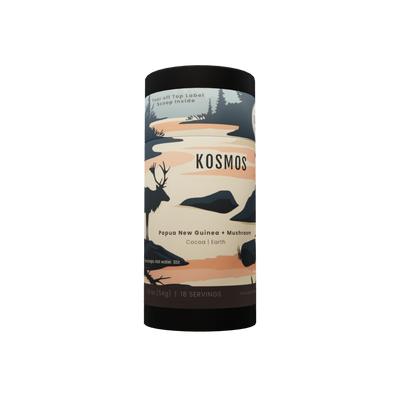
Cutting fresh comb is slow, and the cell you cut stands open to everyone who comes after. Riding a shaft somebody else already cut is fast, and you arrive behind them. Every bee meets that question at every junction, and a hive fills with the accumulated labour of bees who each acted only for themselves. Hayek had a word for an order like that, and we named a coffee after it.
Try the practice hive first. It costs nothing and pays nothing, filling the other seats with bots so you can learn the board before a real match.
What makes the giving believable
Most charity games ask you to take the giving on trust. This one hands you the ledger.
You decide what happens to your winnings before the round. Asking in the moment means asking somebody to make a decision about money with a trophy on the screen. Donating is the default, and keeping requires an address, so every prize stays claimable.
A claim about where money went should be free to check, so the settlement history and the payment history both read for nothing. Failed payments are listed alongside successful ones, which makes the history a record. Every payment to the charity carries its transaction id.
The beneficiary is chosen by the Operator and named in the game, and it may change from season to season as the need does. Every settled match records the charity it actually paid at the time, so a change leaves earlier money exactly where the ledger says it went. Ask the game who it is paying today, and read the ledger for who it paid before.
Every payment leaves because somebody asked for it. The amount is read from the settlement rather than recomputed, and the wallet is asked whether it can cover the routing fee before anything moves.
Why bees
Beekeepers in the United States have lost between roughly 29 and 51 percent of their colonies annually for two decades, averaging near 40. Honeybees are livestock, though, and their losses get replaced each spring by splitting hives. North America has some four thousand native bee species, many in documented decline, and every one of them depends on habitat rather than a keeper.
At a glance
🐝 80% of every pot to a pollinator charity, 10% to the winner, 10% to the service
🔍 Settlement and payout history free to read, failures and transaction ids included
🆓 A practice hive that costs nothing and pays nothing
🔓 Apache 2.0 top to bottom, every line of it
🔌 Built on FastMCP 4.0.3 — any compliant MCP client connects
🤝 Honors the DPYC Social Contract
🔑 A keypair you generate yourself is the whole of what you need
⚡ Any Lightning wallet. Wallet of Satoshi for reliability
Links
 GitHub: lonniev/beesknees-mcp
🔌 Connect: beesknees-mcp.fastmcp.app/mcp
👀 The Bee’s Knees
🤖 Guide for AI agents
🌡️ Feeding real bees? FieldData MCP shows when your own ground warmed enough to bring on the bloom, and Good Earth MCP tells you when to mow the meadow and when to leave it standing